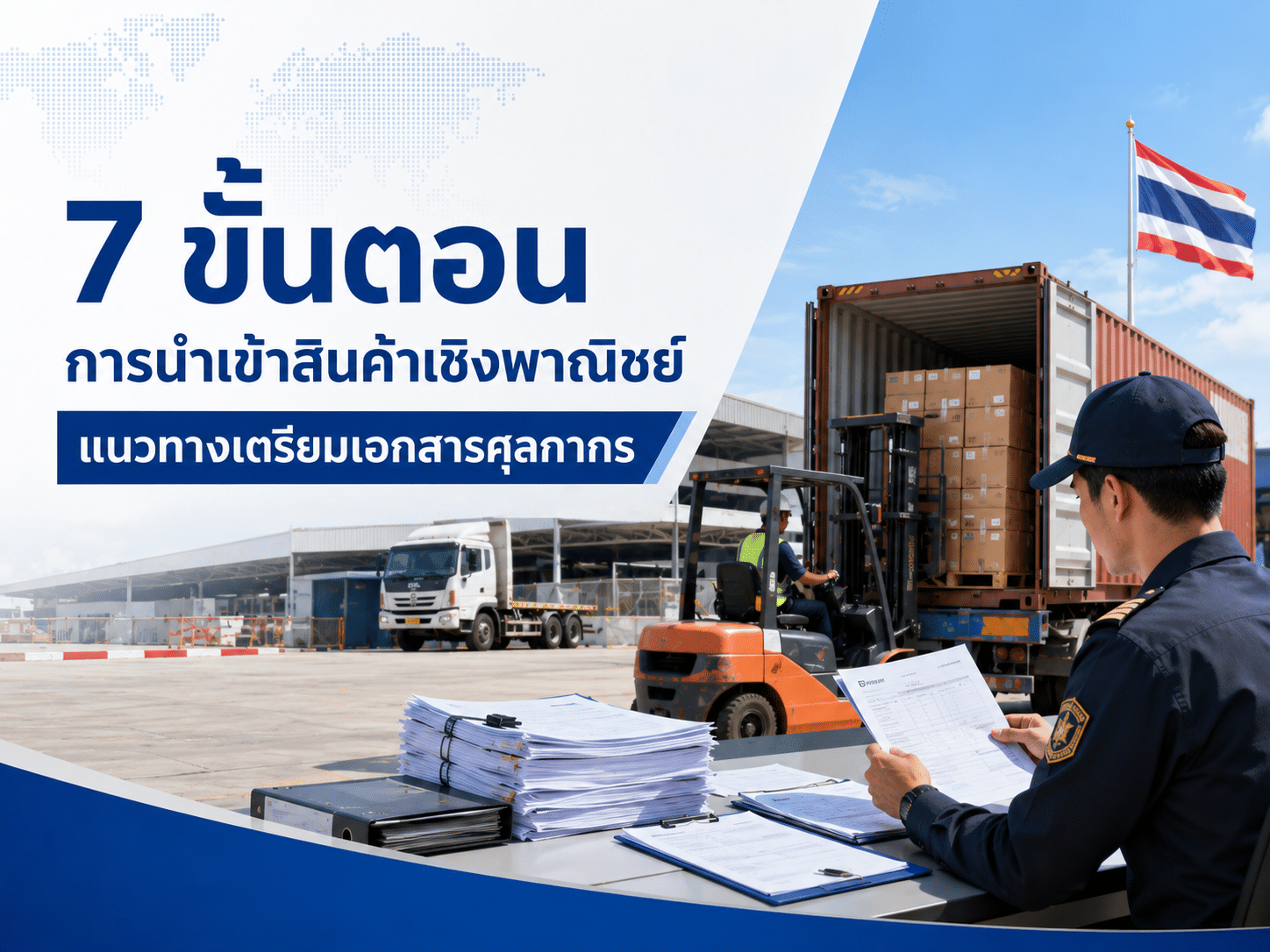
Steps to import commercial goods through Thai customs
Importing goods into Thailand, whether by sea, air or land, requires compliance with the laws and procedures of the Thai Customs Department. Understanding the import process and preparing information in advance helps reduce document errors and the risk of goods being held at the checkpoint.
7 standard steps to import goods into Thailand
1. Register as an importer with the Customs Department
Businesses or companies that want to import commercial goods must first register as a customs formality operator (Paperless) with the Customs Department, so they can submit data electronically or authorise a customs broker to act on their behalf.
2. Check the HS code and import permits
Classifying the import tariff code, or HS code, is a key step that affects duty rates and trade control measures. Some goods are restricted and must be checked case by case and licensed before import, for example:
- Food, medicines, cosmetics and medical devices (regulated by the Thai Food and Drug Administration, FDA)
- Industrial products and electrical appliances (regulated by the Thai Industrial Standards Institute, TISI)
- Communication and telecom equipment (regulated by the NBTC)
- Plants, animals, living organisms and agricultural products (regulated by the Ministry of Agriculture and Cooperatives)
- Chemicals and hazardous substances (regulated by the Department of Industrial Works)
3. Prepare the import documents
Trade and transport documents must contain consistent, correct information, such as the importer name, product description, quantity, weight and delivery terms (Incoterms). The basic documents to prepare are:
- Bill of Lading (B/L) or Air Waybill (AWB): the document of title and transport details for sea or air freight
- Commercial Invoice: shows the price of the goods, currency and trade terms
- Packing List: shows packaging details, gross weight and dimensions
- Certificate of Origin (C/O): used to claim tariff privileges under trade agreements
- Import permit: approval from the government agency responsible for the product
4. Prepare and submit the import declaration
The importer or customs broker uses the documents to prepare the import declaration and submits it through the National Single Window (NSW) to the Customs Department’s system. Once the system validates the data, a declaration number is issued for the clearance process.
5. Customs valuation and duty calculation
Import duty is calculated on the customs value (CIF value: cost of goods + insurance + international freight) multiplied by the duty rate for the HS code, plus value added tax (VAT 7%) and excise tax (if any). Claiming a tariff privilege with a certificate of origin must follow the conditions and rules of the relevant trade agreement.
6. Duty payment and release
The importer pays duties and taxes through electronic channels or the Customs Department’s e-Payment system. The risk management system then sets the release status:
- Green Line (inspection waived): the declaration has passed the initial data check and the goods can be collected, although officers can still request further document checks under the regulations
- Red Line (document check or physical inspection): customs officers must check the documents or physically inspect the goods at the checkpoint before releasing them
7. Collect the goods from the port, airport or warehouse
After customs clearance, the importer coordinates with the shipping line, airline, port or warehouse to pay charges and take the goods to their destination. Port and warehouse costs may apply, such as the delivery order (D/O) fee, port charges, container lift-on/lift-off, storage or container haulage.
Practical tips to reduce errors when importing
- Check the HS code and permit conditions before the goods are shipped from overseas.
- Ask the seller for draft documents (draft B/L, draft invoice) to check the data before the originals are issued.
- Describe the product, its characteristics and use clearly in the documents.
- Check the trade terms (Incoterms) such as EXW, FOB or CIF to allocate cost responsibilities.
- Send the documents to your customs broker before the vessel or aircraft arrives in Thailand.
For advice on preparing documents, checking tariff codes or import customs clearance, contact KTC Global Logistics at 02-286-1967 or LINE: @ktclogistics.