Understanding prohibited and controlled goods in exports
Whether you are sending a small parcel or a commercial export, the first thing to consider is the customs law of both Thailand and the destination country. Checking the status of your goods helps prevent export holds, detention at customs or fines.
The difference between “prohibited goods” and “restricted goods”
Under Thai customs law, goods with export restrictions fall into two main groups:
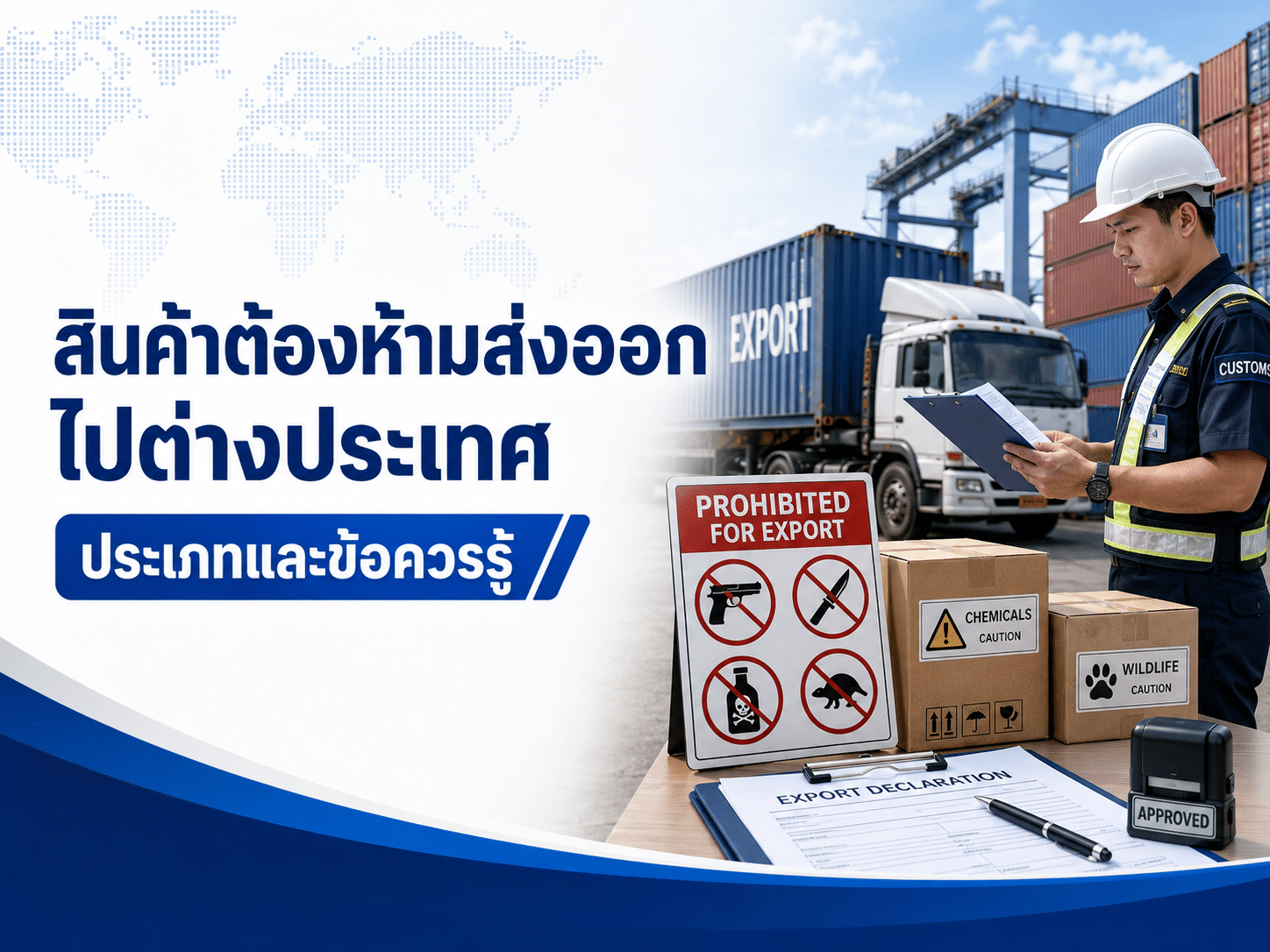
- Prohibited goods: goods the law clearly forbids from being imported or exported, such as narcotics, obscene materials, goods infringing intellectual property or goods affecting national security.
- Restricted goods: goods that can be exported but must be checked case by case and need a permit or must meet the conditions of the relevant government agency before export, such as Buddha images, antiques, plants, live animals, food, medicines, cosmetics, chemicals and dangerous goods.
Common categories restricted in international shipping
Goods that carriers or airlines often restrict can be grouped as follows:
1. Dangerous goods and flammable substances
Goods that pose a safety risk in transit, such as compressed gases, aerosol cans, flammable materials, corrosive chemicals, and lithium batteries or devices with built-in batteries. These need a safety data sheet (SDS) and packaging that meets international standards.
2. Living organisms, plants and animal products
Plants, seeds, pets, animal carcasses or products made from protected wildlife, such as ivory or certain animal skins, often fall under CITES and plant and animal quarantine laws, and always need sanitary or phytosanitary certification first.
3. Food, medicines and health-regulated products
Fresh food, dairy products, processed meat, modern medicines and dietary supplements. Each destination country has food and drug authorities with specific requirements, such as bans on processed meat or halal certification standards.
4. Valuables and financial instruments
Cash, bonds, gold bars, uncut gemstones or official identity documents are often refused by general parcel carriers because of security risks and anti-money laundering rules.
Examples of destination-specific rules
Besides Thai law, exporters must consider the customs rules of the destination country. For example:
- Singapore: strictly prohibits importing chewing gum and e-cigarettes, and tightly controls herbal medicines.
- Malaysia: has strict requirements for meat products and food that must be certified to specific standards.
- China: controls radio transmitting equipment, and printed materials or maps showing borders.
Legal consequences of exporting goods incorrectly
Exporting prohibited goods, or restricted goods without a permit, can lead to:
- Goods being detained, seized or destroyed at the customs checkpoint
- Fines under customs law
- A record of customs violations that affects future import and export clearance
- Criminal prosecution in serious cases involving prohibited goods
How to check your goods before exporting
To stay compliant and reduce operational risk, exporters should follow these basic steps:
- Check the HS code: classify the goods to see whether they are restricted and need an export permit.
- Study the destination country’s rules: check the list of prohibited imports on the destination country’s embassy or customs website.
- Prepare product documents: have clear documents showing composition, product labels or the SDS.
- Consult your logistics provider: ask about the airline’s or shipping line’s acceptance conditions before packing.
For more information on export documents and customs procedures, contact KTC Global Logistics at 02-286-1967 or LINE: @ktclogistics.