




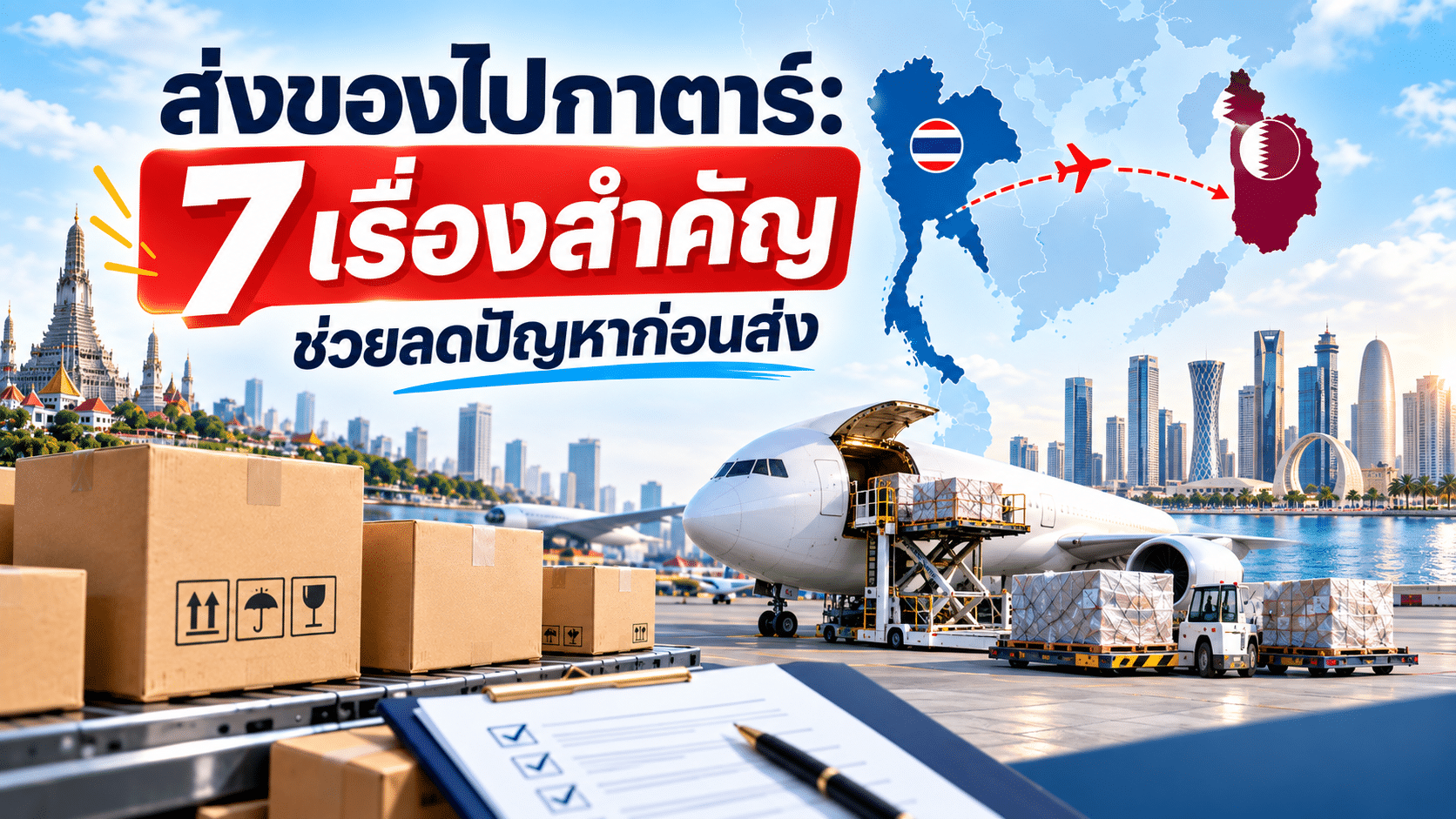
Shipping to Qatar, whether documents, parcels, commercial goods, samples, spare parts or large volumes, involves more than the freight price. You also need to consider the type of goods, transport mode, documents, customs clearance and Qatar’s import requirements.
KTC Global Logistics ships goods from Thailand to Qatar by air, by sea and door to door, depending on the type of goods and the conditions of each shipment.
Preparing complete information before you ask for a quote helps estimate costs more accurately and reduces problems when the goods arrive.
1. What are the ways to ship to Qatar?
Choose how to ship to Qatar based on the type of goods, size, weight, quantity, urgency and delivery address.
Air freight to Qatar
Suits documents, parcels, samples, spare parts or goods that need to arrive quickly. Air freight is charged on actual weight and volumetric weight, or chargeable weight.
If the goods contain batteries, liquids, chemicals or dangerous goods, give the details before asking for a quote, because airlines may have extra requirements.
Sea freight to Qatar
Sea freight suits large volumes, heavy goods or shipments that do not need to arrive as quickly as by air.
It can be divided into:
- LCL for less than a container load
- FCL for a full container, such as 20’GP or 40’HC
Choose LCL or FCL based on volume, weight and the total cost of the shipment, not just the number of cartons.
2. Door to door, door to port and port to port: what is the difference?
Door to door
The provider handles everything from pickup at origin in Thailand to delivery at the consignee’s premises in Qatar, within the scope stated in the quotation.
Note: door to door does not always mean the price includes import duty and every other cost. Check whether the term is DAP, DDP or another arrangement, and who is responsible for duties and taxes at destination.
Door to port
The provider collects the goods at origin and ships them to the destination port or airport. The consignee or their agent then takes over.
Port to port
Suits companies that already have a team or agents handling formalities at origin and destination. The provider is responsible only for the leg between the ports or airports as agreed.
3. Who is Qatar shipping for?
Shipping to Qatar can be used by both individuals and companies, for example:
- People sending documents or parcels to relatives, friends or contacts in Qatar
- Companies selling goods to customers in Qatar
- Manufacturers sending product samples for business negotiations
- Companies sending spare parts, machinery or equipment to projects in Qatar
- People relocating or working in Qatar who need to send certain personal items
However, personal shipments and commercial imports have different conditions, so state the type of import clearly before asking for a quote.
4. Information to prepare before asking for a Qatar shipping quote
For a realistic price estimate, prepare the following:
- Product name and description
- Number of cartons, pallets or pieces
- Dimensions (width × length × height) of each package
- Weight per package and total weight
- Value of the goods
- HS code, if available
- Pickup address in Thailand
- Delivery address in Qatar
- Cargo ready date
- Whether you want air or sea freight
- Incoterms for commercial shipments, such as EXW, FOB, CIF, DAP or DDP
- Product photos, if the goods need to be checked
Saying only “I have goods to send to Qatar, how much is it?” is not enough for an accurate freight calculation, because freight depends on weight, volume, type of goods and the actual pickup and delivery points.
5. Documents used for shipping to Qatar
For commercial goods, the documents generally include:
Commercial invoice
Shows the sale details, such as seller, buyer, product description, quantity, price, currency and trade terms.
Packing list
Shows the packing details, number of cartons, weight and dimensions of the goods.
Certificate of origin
For commercial imports, a certificate of origin may be one of the supporting documents for import clearance. Check the requirements for the type of goods and the shipment conditions before shipping.
Transport documents
- Bill of lading for sea freight
- Air waybill for air freight
- Delivery order when the goods reach destination, depending on the transport mode
Some goods may need extra documents or permits according to the requirements of the relevant authorities in Qatar.
6. Which goods need special checks?
Before you ship to Qatar, check whether the goods are general goods, controlled goods or prohibited goods.
Some controlled goods may need approval from the relevant authority before import.
Examples of goods to check before shipping:
- Food and beverages
- Cosmetics and personal care products
- Medicines and health products
- Chemicals
- Certain electronic goods
- Batteries and dangerous goods
- Goods that need standards certification
Some goods may also be prohibited or restricted under Qatari law, so always check before shipping.
More information is available from the
General Authority of Customs – Qatar
7. The shipping process to Qatar
Step 1: Send the product details
Send complete details of the goods, quantity, size, weight, photos and the origin and destination information.
Step 2: Check requirements
Check the type of goods, HS code and import requirements, especially for food, cosmetics, medicines, chemicals and controlled goods.
Step 3: Choose the transport mode
Assess whether air freight, LCL, FCL or a door-to-door service suits the shipment.
Step 4: Quotation
Check which costs the price includes, such as:
- Pickup charge
- Export customs clearance
- Freight
- Origin charges
- Destination charges
- Import clearance
- Delivery to the consignee
- Import duties and taxes
Step 5: Booking and shipping
Once the price is confirmed, the booking is made, the goods are picked up, documents prepared and the goods shipped on a suitable sailing or flight.
Step 6: Import clearance and delivery
When the goods reach Qatar, the importer, agent or customs broker files the customs declaration and completes import procedures before the goods are released.
Frequently asked questions about shipping to Qatar
Can I send a parcel to Qatar?
Yes, in many cases, but the type of goods, weight, size, value and import restrictions must be checked first, especially for food, cosmetics, medicines, liquids and goods containing batteries.
Can I send documents to Qatar?
Documents can be sent by air or courier. State what kind of documents they are and whether they have commercial value so the right service can be chosen.
Can I ship to Qatar door to door?
It can be arranged in many cases, but the goods, delivery address and importer status must be checked first, and it must be clear who pays the taxes and destination charges.
Can the consignee be an individual?
Importing in a personal name may be possible for some goods, but the quantity, value, purpose of import and product requirements must be considered before shipping.
What is needed for commercial shipments?
Generally a commercial invoice, packing list and transport documents, plus a certificate of origin or extra permits if the goods are subject to specific requirements.
Want a quote for shipping to Qatar?
For a quick quote from KTC Global Logistics, please prepare:
- Product name
- Quantity
- Dimensions
- Weight
- Pickup address
- Delivery address in Qatar
- Cargo ready date
- Product photos
- HS code, if available
- Preferred transport mode
Planning to ship goods to Qatar?
Contact KTC Global Logistics and our team will check your cargo details, route and a suitable transport option before you confirm the shipment. Contact us